Base64 Encode / Decode
Encode any text to Base64 or decode a Base64 string back to plain text. Supports standard and URL-safe variants. Runs entirely in your browser — your data never leaves your device.
What is Base64?
Base64 encodes binary data (or any text) as a string of 64 printable ASCII characters (A–Z, a–z, 0–9, +, /). The name comes from the 64 characters in the alphabet. It adds roughly 33% size overhead because every 3 bytes of input become 4 characters of output.
Standard vs URL-safe
Standard Base64 (RFC 4648) uses + and / which are special characters in URLs and query strings. URL-safe Base64 (RFC 4648 §5) replaces + with - and / with _, and drops the trailing = padding — making it safe to embed in URLs without percent-encoding.
Common uses
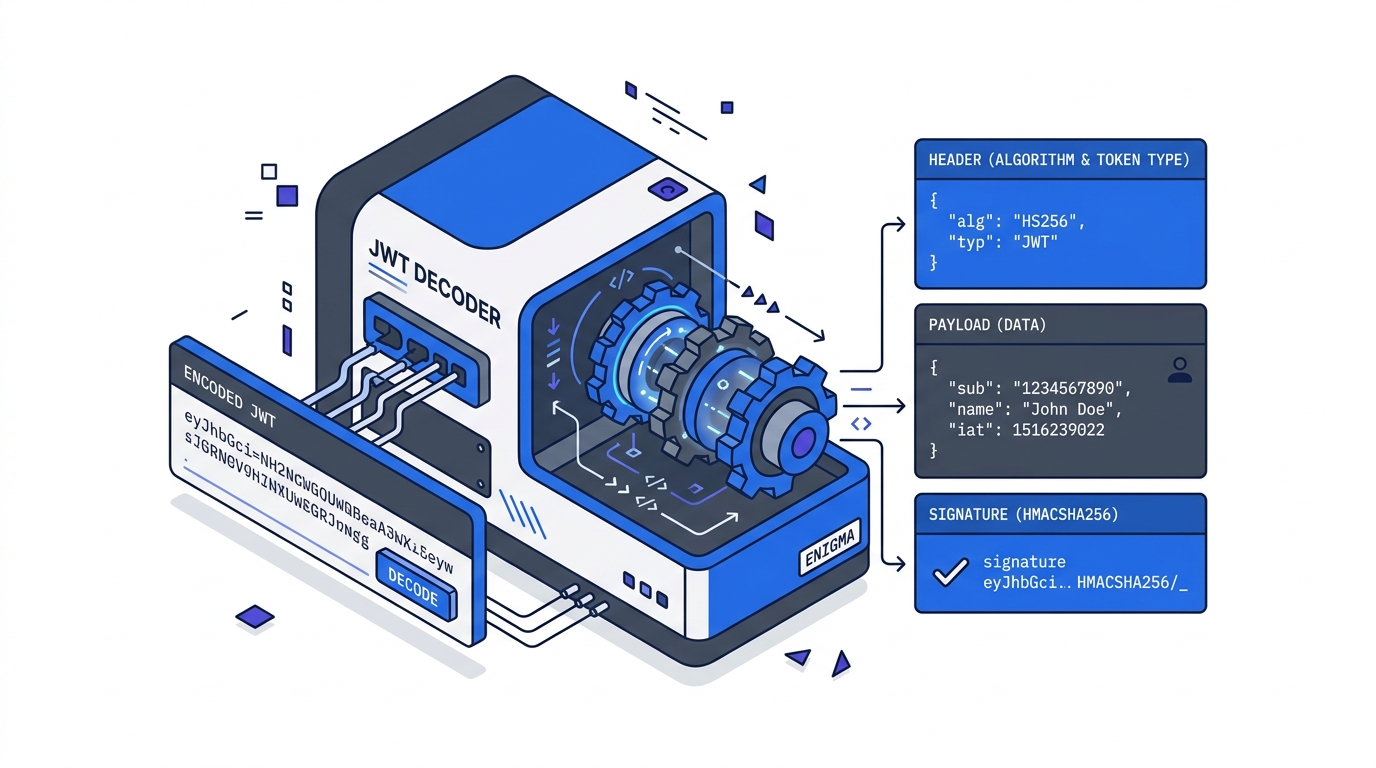
Base64 is used to embed images in CSS/HTML (data URIs), encode binary payloads in JSON APIs, transmit email attachments (MIME), store credentials in HTTP Basic Auth headers, and encode the header and payload parts of JWTs.